Latest Blog Posts
-

-

-

-

-

-

-

-

-

Why Successful Local Brands Fail When Scaling
May 25, 2026
-

Apr 07
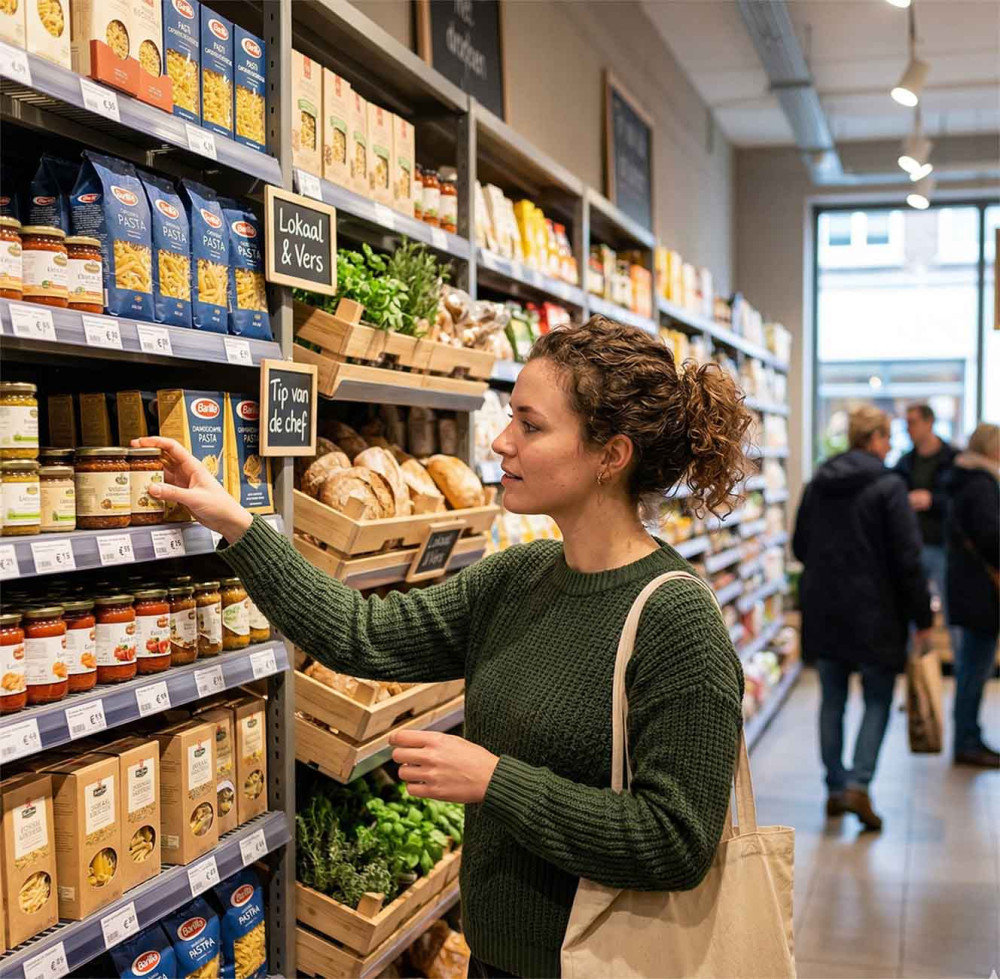
The Product No Longer Decides: How Retail and Merchandising Influence Sales More Than Taste
Introduction
The food market in 2026 demonstrates a fundamental shift: product quality is no longer the key driver of sales. Despite investments in formulation, improvements in taste, and assortment development, many manufacturers face situations where weaker products outperform stronger ones. The reason lies not in changing quality standards, but in a transformation of the logic of sales itself.
Purchase decisions are increasingly formed not at the product level, but at the level of its presentation. Retail and merchandising are becoming the key elements that determine visibility, accessibility, and interpretation of the product. In these conditions, taste ceases to be a competitive advantage, as it comes into play only after the purchase, while the decision is made before it. This changes the entire economics of the category and requires a revision of sales management approaches.
Shift of the decision point: from product to shelf
The traditional model assumed that consumers evaluate products based on their characteristics, including taste, composition, and price. In the reality of 2026, the purchase decision is made much earlier — at the stage of visual contact with the shelf. At that moment, the product has not yet been evaluated in terms of quality, but it has already been selected or ignored.
This means that products compete not by their properties, but by their ability to attract attention and be interpreted as the right choice. In conditions of limited time and overloaded assortments, the customer does not analyze all options but reacts to the most visible and understandable signals.
• placement level
• visual accessibility
• context of neighboring products
These factors create a primary filter through which only a small part of the assortment passes. All other products, regardless of their quality, remain outside the zone of attention.
Taste influences repeat purchases, but not the initial choice. If a product is not selected, its quality does not matter.
Thus, the decision point shifts from the product to the shelf — and therefore to the management of space and visual logic within the category.
Merchandising as a tool for demand management
Merchandising has moved beyond an operational task and become a strategic tool directly affecting sales. It determines not only product visibility but also its interpretation within the category context. Placement next to specific items, inclusion in thematic blocks, and presentation format create additional signals that influence choice.
A product placed at eye level and integrated into the logical structure of the shelf gains an advantage regardless of its characteristics. Conversely, even a strong product located outside the main attention zones loses a significant share of potential sales.
• eye-level placement and high-attention zones
• blocks and clusters within the category
• participation in promotional zones
Each of these elements affects the probability of selection. Their effect is amplified when combined, creating a systemic advantage for certain items.
Merchandising does not reflect demand — it creates it. This means that managing sales is impossible without controlling placement. Manufacturers who ignore this factor effectively lose a significant share of potential demand.
The role of retail: control of the shelf and redistribution of sales
In 2026, retail is not just a distribution channel but a key actor in shaping demand. It controls the shelf, defines assortment structure, and distributes customer attention. This allows it to redistribute sales between products regardless of their objective characteristics.
Placement decisions are based on economic indicators, including margin, cooperation terms, and turnover. This means that a product with better economics for the retailer may receive better placement even if its quality is lower.
Retail manages not only the assortment but also the probability of each product being chosen. Additional tools such as promotions and special placements are used to temporarily boost demand and quickly reshape sales structure.
As a result, the product becomes dependent on placement conditions and support, not only on its intrinsic qualities.
Category overload: competition for seconds of attention
Modern food categories are characterized by high assortment density. The number of available options exceeds the customer’s ability to process them. In these conditions, attention becomes a limited resource that all products compete for.
Customers do not review the entire shelf. They notice only a portion of the offerings that fall within their attention zone. This creates the effect of “invisible products” that exist in the assortment but do not participate in the selection process.
• limited time for decision-making
• visual overload
• reduced depth of analysis
These factors increase the importance of merchandising and placement. A product must not only be present but must be noticeable in the first seconds of contact.
On the shelf, it is not the best product that wins, but the most visible one. This changes the approach to assortment management and makes visibility a key driver of sales.
Price as an element of merchandising, not a standalone factor
Price continues to play an important role, but its influence has changed. It is no longer perceived in isolation but interpreted within the context of merchandising. The same price level can be perceived differently depending on neighboring products and shelf structure.
Placement next to more expensive or cheaper items creates price anchors that influence perceived value. This shifts choices toward certain products and reinforces the impact of merchandising on sales.
Price works only in context. For businesses, this means considering not only cost and margin but also the product’s surroundings on the shelf.
Logistics and availability: the invisible sales driver
Product availability on the shelf is a basic yet critical factor. Even with strong merchandising, the absence of a product at the moment of choice leads to lost sales. In highly competitive environments, this loss is often permanent.
Supply stability builds trust. Frequent stockouts reduce the likelihood of repeat purchases, even if the product was previously evaluated positively.
A product that is not on the shelf effectively does not exist for the customer. Therefore, logistics becomes part of the sales system and directly affects results.
Business mistakes: why strong products systematically lose
The key mistake manufacturers make is continuing to view the product as the main driver of sales. Investments in formulation, taste improvement, and assortment expansion are seen as universal solutions for growth. However, in an environment where purchase decisions are made at the shelf level, such investments do not translate into sales without proper context management.
The second systemic mistake is the isolated management of functions. Production optimizes costs, marketing works on packaging, and sales interact with retail, but there is no unified logic connecting these areas. As a result, a product may be high-quality and competitively priced but still lose due to poor placement or incorrect category role. This creates the effect of a “good product without sales,” which cannot be explained by traditional metrics.
The third issue is the underestimation of shelf economics. Companies often focus on their own margins without considering that retailers make decisions based on their own economics. If a product does not meet expectations in turnover, margin, or category role, it does not receive the necessary level of support. In such conditions, even a strong product starts at a disadvantage.
An additional factor is the overestimation of brand influence. Awareness and trust are important, but they do not compensate for lack of visibility. A brand works only if the product enters the customer’s field of vision. Otherwise, it does not participate in the decision-making process.
Together, these mistakes create a systemic distortion: businesses manage the product, while the market is managed by the shelf. This leads to the accumulation of hidden losses reflected in low turnover, increased promotional costs, and unstable sales.
Merchandising as a system of sales management, not an operational function
In 2026, merchandising fully shifts from an operational task to a strategic management domain. It becomes not just a way of placing products, but a mechanism for distributing demand within the category. Through it, it is determined which products will be chosen and which will remain unnoticed, regardless of their objective characteristics.
The key change is that merchandising structures the choice process. It defines perception sequences, sets priorities, and creates visual scenarios in which customers make decisions. A product does not compete with all items in the category — it competes for a position within this sequence. If it is not integrated into it, it does not participate in sales.
This means that sales management must begin not with the product, but with an understanding of shelf logic. It is necessary to consider how attention zones are formed, which products create price anchors, and how customer flow is distributed within the category. Without this, even a strong product remains outside the system where real decisions are made.
The economics of merchandising are directly linked to margin distribution. Retail strengthens positions that contribute the most to its financial results and weakens those that do not meet its criteria. This creates an additional layer of competition in which a product must be attractive not only to customers but also profitable for the retailer.
As a result, a new market model emerges where sales are determined not by product properties, but by the ability to occupy the right place within the system. Companies that understand this logic begin to manage not only their assortment but also the context of its perception. Those who continue to focus solely on the product face growth limitations that cannot be overcome by improving quality or lowering price.
Your experience matters! Take a short survey and see how others answered. Take part