Latest Blog Posts
-

-

-

-

-

-

-

-

-

Why Successful Local Brands Fail When Scaling
May 25, 2026
-

Apr 01
The Illusion of Choice: How Assortment Misleads Consumers and Increases Sales
Introduction
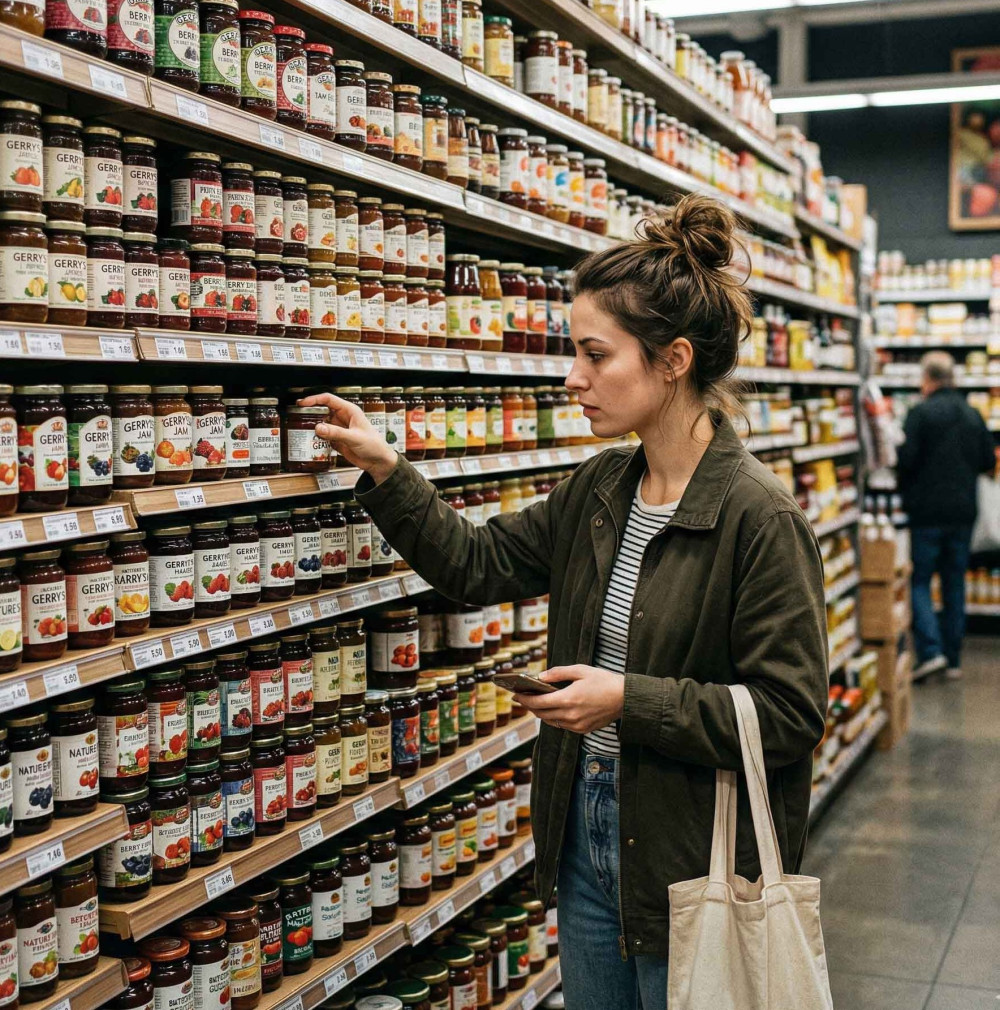
The modern food market in 2026 demonstrates a paradox: the expansion of assortment does not increase freedom of choice, but rather structures it in favor of predetermined scenarios. The shopper perceives the shelf as a space of variety; however, in reality, their decision is formed within a limited set of options highlighted through visual and price cues. This creates an illusion of choice, in which the consumer feels control over the decision but, in fact, follows the logic set by retail and the manufacturer.
The growth in the number of product positions is driven not only by an attempt to meet demand but also by the management of attention. In an overloaded market, assortment becomes a tool for influencing behavior rather than a reflection of real diversity. This changes the economics of the category: sales are formed not through expanding supply, but through managing perception and directing choice.
Assortment as Architecture, Not a Set of Products
In the traditional model, assortment was formed based on the logic of covering needs. In 2026, it represents an architecture in which each position performs a specific function. Products no longer exist as independent units—they are embedded in a system that guides the shopper toward target decisions.
A key element of this architecture is the distribution of roles. The category includes anchor positions that define the price range, core products that generate sales volume, and additional options that create a sense of choice. At the same time, not all positions are intended for active sales—some perform a supporting function, enhancing the attractiveness of other products.
• anchor positions that define price boundaries
• target products with maximum margin
• supporting SKUs that create the illusion of variety
This structure allows retailers to manage shopper behavior without direct intervention. The shopper perceives the assortment as a wide choice, but in reality moves along a predefined path.
Consumer Behavior: Choice Without Analysis
In 2026, the shopper operates under conditions of limited attention and time. This leads to decisions being made not through analysis of all available options, but through simplified perception models. The basis is not the comparison of characteristics, but the reaction to the most noticeable and understandable signals.
With a large number of options, a cognitive overload effect arises. Instead of considering more products, the shopper reduces the number of options analyzed. This makes them more sensitive to assortment structure and reduces the likelihood of choosing extreme options.
Under these conditions, the “middle” product is most often chosen. It is perceived as the optimal balance between price and quality, even if its characteristics are not the best. This effect is actively used in assortment design, allowing demand to be directed toward the most profitable positions.
Thus, increasing the number of options does not expand choice, but reduces its depth. The shopper makes decisions faster, but within a limited set of options defined by the category structure.
The Illusion of Variety as a Tool for Increasing Sales
Creating the illusion of variety makes it possible to manage category perception and stimulate purchases. A large number of options creates a sense of abundance, which increases trust in the category and lowers purchase barriers. At the same time, the actual difference between products may be minimal.
One of the key tools is variation within a single brand. Different flavors, packaging formats, and minor changes in composition create the impression of a wide product line, although in reality the products remain similar in characteristics. This helps retain the shopper within the brand, reducing the likelihood of switching to competitors.
Price differentiation is also used. The presence of cheap, mid-range, and premium options forms a price ladder along which the shopper moves toward the most profitable position for the business. At the same time, extreme options often play a supporting role, enhancing the attractiveness of central products.
As a result, assortment works as a system of stimuli that directs behavior, rather than as a reflection of real diversity.
The Role of Retail: Managing the Structure of Choice
Retail plays a key role in shaping the assortment and its perception. It determines which products appear on the shelf, in what volume, and in what context they are presented. This allows it to manage not only supply, but also the logic of choice.
Decisions about including products in the assortment are made with consideration of their economic efficiency. This includes margin, turnover, and promotional potential. As a result, the category structure is formed not only based on demand, but also on the financial objectives of retail.
Retail also manages the visual logic of the shelf. Product grouping, highlighting specific blocks, and the use of additional merchandising elements create scenarios within which the shopper makes decisions. This enhances the illusion of choice effect, as attention is directed to specific zones.
Thus, assortment becomes the result of joint management by retail and manufacturers, rather than simply a collection of available products.
Price and Assortment: Forming Reference Points
In an overloaded assortment environment, price is perceived not in isolation, but in comparison with other options. This creates a system of reference points that influences the perception of value. The shopper evaluates not the absolute price, but its position within the range.
The presence of extreme values plays an important role. Expensive products set the upper boundary, making mid-range options more attractive. Cheap products form the lower reference point but are often perceived as a compromise in quality. As a result, the main volume of sales is concentrated in the middle segment.
This effect is reinforced by visual placement and assortment structure. Products that are in the center of attention are perceived as the standard against which other options are evaluated. This allows choice to be managed without changing the price itself.
Thus, price becomes part of a system in which assortment defines the framework of perception.
Hidden Losses: When Assortment Starts Working Against the Business
Despite its advantages, assortment expansion is associated with risks. The main problem is that increasing the number of positions leads to higher operational costs. This includes logistics, storage, and inventory management.
An internal competition effect also arises. Products within the same line begin to compete with each other, reducing the overall sales per item. This can lead to demand dilution and reduced category efficiency.
Another factor is increased management complexity. A large number of SKUs requires more complex coordination between functions, which increases the likelihood of errors and reduces responsiveness to market changes.
Thus, assortment becomes a source of both opportunities and risks. Without systematic management, it can reduce business efficiency.
The Illusion of Choice as a Demand Management System
In 2026, assortment finally becomes a tool for demand management. It shapes not only supply, but also the choice scenarios within which the shopper operates. This makes it a key element of competitive strategy.
The key success factor is the ability to build a structure in which each position performs its function. This requires an understanding of consumer behavior, retail logic, and relationships within the category. Without this, assortment becomes chaotic and loses its effectiveness.
The illusion of choice is not a random effect—it is the result of deliberate management. It allows sales to be increased by directing demand toward the most profitable products. Companies that understand this logic gain the ability to manage not only assortment, but also consumer behavior.
Your experience matters! Take a short survey and see how others answered. Take part