Latest Blog Posts
-

-

-

-

-

-

-

-

-

Why Successful Local Brands Fail When Scaling
May 25, 2026
-

Feb 19
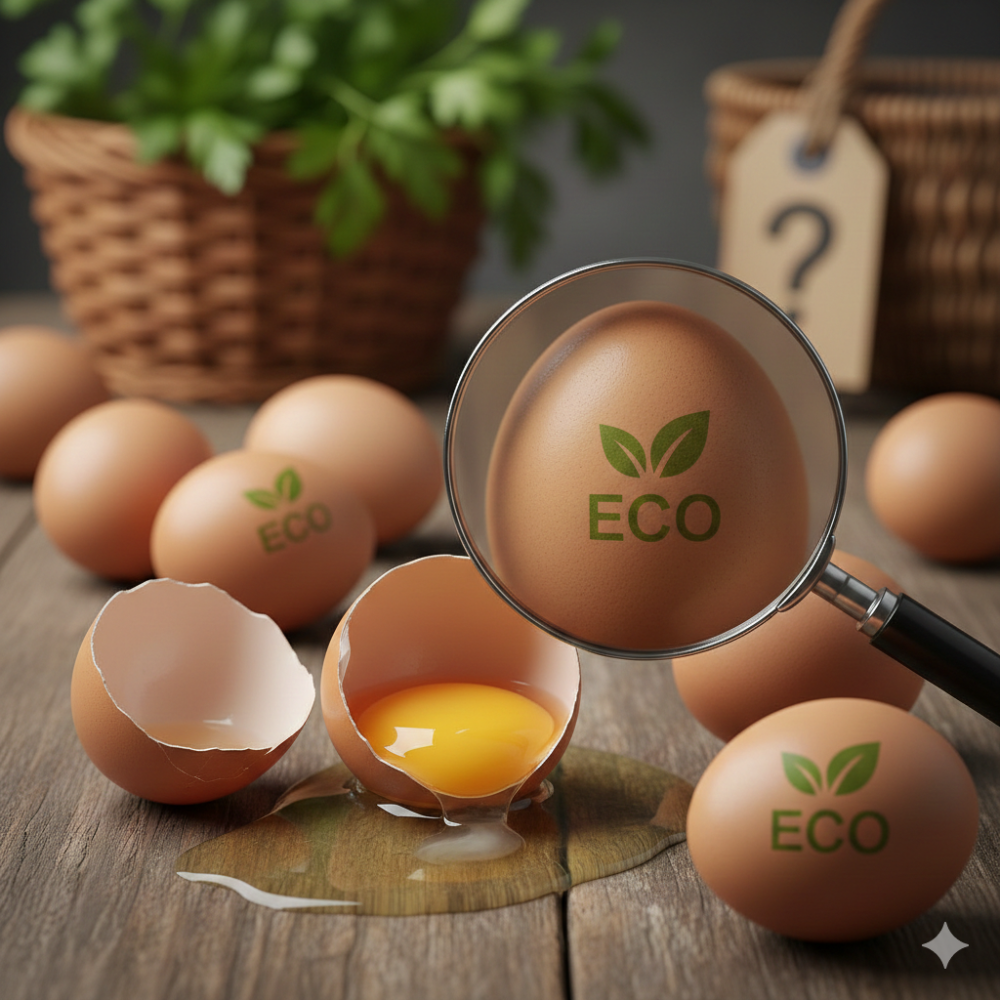
Eco-labeled eggs: real value or marketing?
"Eco" as a trend
Today, eggs on supermarket shelves can cost twice as much simply because the packaging says "eco" or "organic." Such products are often marketed as more natural, safe, and nutritious. But does this always truly mean higher quality, or is it just a clever marketing ploy?
Growing interest in healthy eating, sustainable production, and animal welfare has made "eco" labeling one of the most noticeable trends in grocery retail. Consumers are increasingly willing to pay more for the feeling of naturalness, even if they don't always understand the meaning behind this designation.
What does "eco" mean?
A truly eco- or organic product typically includes:
• free-range chickens with access to open space,
• feed free of antibiotics, growth hormones, and GMOs,
• limited use of chemicals and stricter environmental requirements.
In some countries, these parameters are enshrined in law and confirmed by certification. However, in Russia and many CIS countries, uniform and strictly controlled standards are still less developed. This means that producers may interpret the term "eco" differently, and consumers are forced to rely on brand reputation, additional certification marks, or information on the packaging.
The cost
Producing "eco-friendly" eggs can indeed be more expensive. Free-range eggs require more space, natural feed is more expensive, and environmental monitoring and certification increase farm expenses. This objectively increases the cost of the product.
But in practice, shelf prices are determined by more than just costs. In some cases, the premium is linked to brand positioning and the consumer's willingness to pay more for an "eco-friendly" image. Therefore, the price difference between regular and "eco-friendly" eggs may reflect both actual costs and the producer's marketing strategy.
Buyer psychology
For many consumers, the word "eco" on packaging is more than just a characteristic, it's an emotional signal. It's associated with caring for family health, a responsible attitude toward nature, and more humane animal welfare.
By purchasing such a product, people feel they're making an informed and "right" choice. This effect is reinforced by packaging design, natural colors, farm images, and additional statements like "natural" or "farm-raised." Manufacturers actively utilize these elements, recognizing that purchasing decisions are often made not only rationally but also emotionally.
Real benefits or illusion?
In terms of basic nutritional value, the differences between regular and eco-friendly eggs are usually minor. Their protein, fat, and essential micronutrient contents are similar. However, differences in detail are possible.
Sometimes eco-friendly eggs have a more intense yolk color, due to the birds' diet, and a slightly different flavor or texture. Furthermore, consumers may perceive these eggs as fresher or more natural, which influences the overall impression of the product.
For gourmets or those who strictly choose products of a certain origin, these differences may be important. For the general consumer, they are often less noticeable and do not always justify the significant price difference.
European experience
In Europe, a clear labeling system has been in place for several years, helping consumers understand the conditions in which poultry is raised:
• "0" — organic production,
• "1" — free-range,
• "2" — indoor floor housing,
• "3" — cage housing.
This system allows consumers to quickly understand what they are paying for and reduces the risk of manipulation of the term "eco." In the CIS countries, such transparent and universal labeling is still less developed, so trust in the "eco" label largely depends on the brand and additional information on the packaging.
Bottom line
Eggs labeled "eco" can truly represent valuable value if they are backed by transparent standards, fair production, and verified certification. However, until uniform rules and clear labeling are established everywhere, some such products remain more of a marketing ploy than a guarantee of fundamentally different quality.
A reasonable approach for consumers is to pay attention not only to the word "eco" but also to the manufacturer, the feed composition, the conditions under which the birds are raised, and the presence of independent certifications. It is this information, not the label on the packaging, that often reveals the most about the product.
Your experience matters! Take a short survey and see how others answered. Take part