Latest Blog Posts
-

-

-

-

-

-

-

-

-

Why Successful Local Brands Fail When Scaling
May 25, 2026
-

May 05
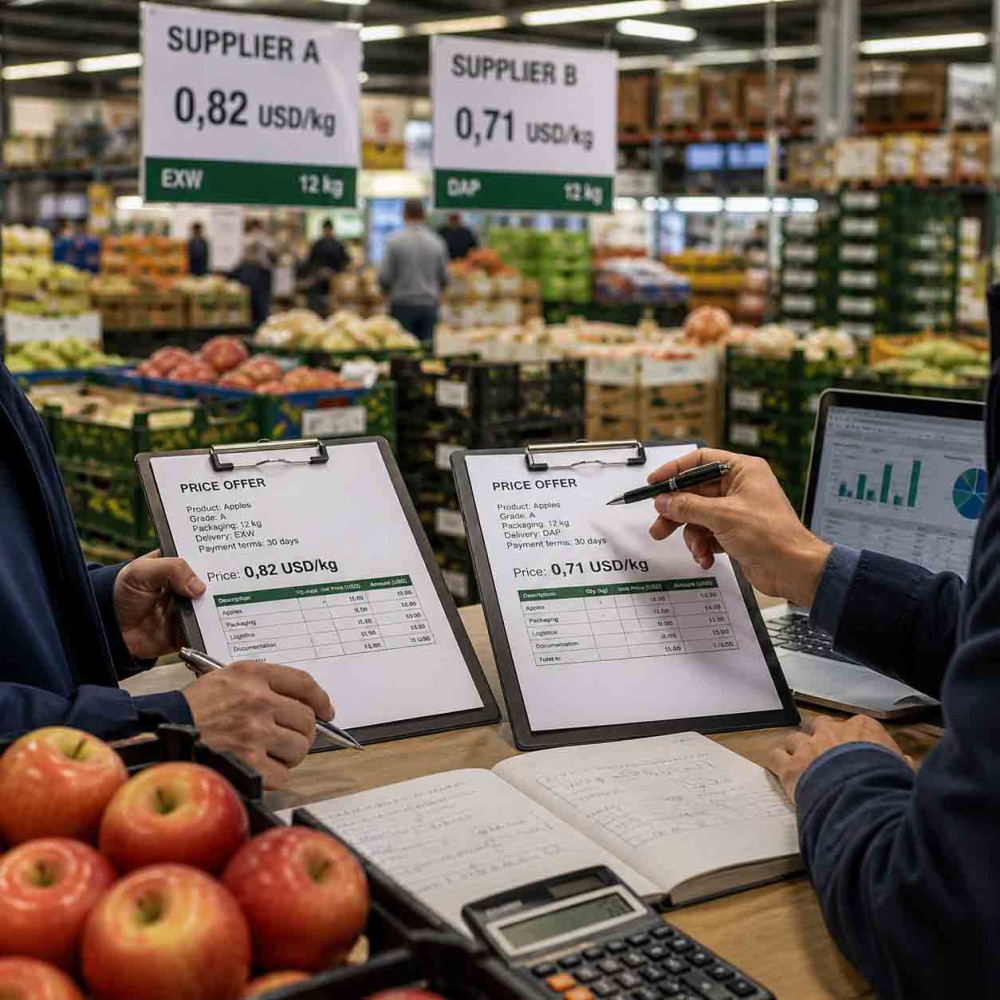
B2B Pricing: Why the Same Product Is Sold at Different Prices
Introduction
Why is the same product, manufactured on the same production line and with identical characteristics, sold to different buyers at significantly different prices? In 2026, this is not an exception, but the norm. The difference can reach tens of percent, while the cost of production remains unchanged. This raises not a question about the correctness of pricing, but about how pricing in B2B is actually formed.
The key reason lies in the fact that price in B2B is not a reflection of the product, but the result of a system. It is determined not only by costs and the desired margin, but also by the structure of relationships, the level of risk, the stability of supply, and the role of the supplier within the chain. As a result, the same product can have different economics depending on the model in which it is sold. This makes pricing not a calculation, but a management tool.
Why cost has ceased to be the basis for price
The classical pricing model assumes that the price is formed on the basis of cost with the addition of a margin. This logic remains at the level of calculation, but ceases to function as the determining factor. In reality, the price is formed at the point of interaction with the buyer, rather than at the level of production.
Cost establishes the lower boundary, but does not determine the final price. It does not account for risks, service requirements, or channel specifics. As a result, two contracts involving the same product may have different cost structures and, accordingly, different prices.
This means that relying solely on cost is insufficient. It becomes one of the parameters, but not the key factor. The primary importance shifts to the ability to manage the conditions under which the price is formed.
The role of volume and stability
One of the key factors is the volume of purchases and their stability. Large and predictable volumes allow the supplier to optimize production and logistics, reducing risks and costs. This makes it possible to offer a lower price without sacrificing margin.
However, not only the volume matters, but also its predictability. Irregular orders create additional pressure, require flexibility, and increase the likelihood of losses. This is reflected in the price, as the supplier incorporates additional risks.
Thus, price becomes a reflection not only of quantity, but also of the quality of interaction. A buyer who provides stability receives more favorable conditions, even if their volumes are comparable to others.
The sales channel as a pricing factor
The price of the same product can differ significantly depending on the channel. Working with retail, distributors, or direct clients requires different levels of cost and creates different levels of risk.
Retail imposes high requirements in terms of service, logistics, and participation in promotions. This increases costs, which must be reflected in the price. Distributors, in turn, take on part of the functions, but require their margin.
Direct sales reduce the length of the chain, but increase the burden on the supplier. This also affects the price, as it requires additional resources. As a result, the channel becomes one of the key factors determining cost.
Negotiation power and dependency
Price in B2B is directly linked to the negotiating position of the parties. A supplier that has alternative channels and a strong position within the category can dictate terms. One that depends on a single large client is forced to adapt.
Dependency increases pressure on price. The buyer may demand discounts, change conditions, and use volume as a leverage tool. The supplier, in turn, is forced to make concessions in order to retain the contract.
This makes price a reflection not only of economics, but also of the power structure within the chain. It shows who controls the situation and who makes the decisions.
The role of promotions and hidden conditions
The formal price often does not reflect the real economics of the deal. In B2B, a significant part of the conditions lies outside the price list and includes participation in promotions, bonuses, and additional obligations.
Promotions reduce the effective price, even if the base price remains unchanged. This creates a gap between the declared and actual value, which affects margin.
Additionally, there are conditions related to logistics, returns, and marketing. These increase costs and must be taken into account in the price. Without this, the supplier may underestimate the real cost of the deal.
Logistics and level of service
Price also reflects the level of service expected by the buyer. Delivery frequency, lead time requirements, and storage conditions influence costs and, accordingly, the price.
A high level of service requires more complex logistics and increases operational expenses. This must be compensated in the price; otherwise, margin decreases.
At the same time, buyers are not always willing to pay for this level directly. This creates the need to incorporate it into the overall price structure, which complicates calculation.
Where businesses lose in pricing
The main losses arise from the fact that companies treat price as a fixed parameter, rather than as the result of a system. This leads to an underestimation of the factors that influence economics.
The most common mistakes include:
• focusing only on cost
• ignoring hidden conditions
• underestimating logistics costs
• weak negotiating position
These factors lead to a situation where the price does not reflect real economics, and the business loses profit.
Why the same product has different economics
The key shift lies in the fact that in B2B, the product ceases to be the carrier of value by itself. Its economic outcome is formed not at the production stage, but within the system of interaction, where contract conditions, level of service, logistics structure, and the degree of dependency between the parties are taken into account. This means that the same physical product can simultaneously exist in several economic models, each of which produces a different financial result.
The difference arises from a combination of factors that are rarely considered together. Supply volumes affect utilization and predictability, the sales channel influences cost structure and level of pressure, and working conditions affect variability and risk. At the same time, even minor changes in one of these elements can redistribute margin among participants in the chain. As a result, price becomes only an external manifestation of a deeper system in which profit is actually distributed.
It is particularly important that this difference is not random. It reflects the level of business control. A supplier that controls processes, understands cost structure, and is capable of working with conditions creates more stable economics even at comparable prices. One that operates reactively receives a less predictable result, where margin depends on external factors.
This changes the very logic of competition. Companies begin to compete not with products, but with models. The winner is not the one who produces better, but the one who builds a more efficient system of interaction. This is why the difference in price between identical products is not an anomaly, but a reflection of business maturity and its position within the chain.
Pricing as a management system
In 2026, pricing ceases to be a function of calculation and becomes a tool for managing the entire business model. Price reflects not only the cost of the product, but also the structure of relationships, the level of risks, and the distribution of responsibility among participants in the chain. This makes it a key element through which profit is managed.
Companies that treat price as a static parameter face limitations. They fix the value without taking into account changes in logistics, demand, and working conditions with clients. As a result, margin becomes unstable, and any deviations lead to losses. This is especially evident when working with large retail chains, where pressure on price is combined with increasing requirements.
A system-based approach assumes that price adapts to conditions. This means managing not only the level of price, but also the structure of the deal: volumes, service, delivery frequency, and additional obligations. The supplier begins to treat price as a variable that reflects current economics, rather than as a fixed value.
At the same time, the key factor becomes transparency. Without understanding how profit is formed at each stage, it is impossible to manage pricing effectively. This requires data integration, analysis, and the ability to make decisions based on real economics rather than assumptions. As a result, pricing becomes a mechanism that connects all elements of the business and allows them to be managed as a unified system.
Companies that transition to this approach gain a sustainable advantage. They are able to work with different channels, adapt conditions, and maintain margin even under market pressure. Those that continue to perceive price as a fixed indicator find themselves in a situation where their profit is determined not by them, but by external conditions.
Your experience matters! Take a short survey and see how others answered. Take part