Audio version
Hello to everyone who produces, supplies, sells, or simply loves great food and beverages! You're with Fresh Insider Agency, and we're back to explore the week's most interesting developments.
Today, we'll find out why two major delivery platforms have decided to join forces, what concerns have emerged about fresh produce safety, and how robotics is transforming modern greenhouse operations. And we'll finish with an inspiring initiative that keeps perfectly good food out of landfills and puts it to work helping people.
Let's get started!
Deal of the Week: Two Food Delivery Giants Join Forces in a $17 Billion Acquisition
We begin with a major deal that could reshape the US online grocery market. DoorDash, known for delivering food from restaurants and stores, has announced an agreement to acquire Instacart, one of North America's leading grocery delivery platforms.
The transaction is valued at approximately $17 billion. The combination would bring together DoorDash's extensive delivery network and Instacart's technology, which supports online grocery shopping and order fulfilment for supermarkets and other food retailers.
For consumers, this could mean more delivery options. For supermarkets, it may create new opportunities while also increasing their dependence on major digital platforms.
The transaction is still subject to the necessary approvals, but it has already become one of the week's most notable developments in the grocery retail industry. [1]
Food Safety: US Produce Inspections and Tomato Restrictions in Italy
Now, let's turn to two stories that highlight just how complex it has become to ensure the safety of fresh produce.
Who is inspecting imported fruits and vegetables? Journalists at The Washington Post examined data from the US Food and Drug Administration (FDA) and found that, since 2009, the agency has inspected only around two percent of Mexican facilities supplying fresh fruits and vegetables to the United States. Meanwhile, the value of these imports from Mexico has quadrupled over the past twenty years, exceeding $16 billion in 2025. A low inspection rate does not necessarily mean the products are unsafe. However, the investigation raises an important question: is the food safety oversight system keeping pace with rapidly growing international trade? [2]
Italy restricts the use of raw tomatoes. Meanwhile, Italian authorities have taken precautionary action in response to identified food safety risks. In the Emilia-Romagna region, the serving of raw cherry and datterini tomatoes has been temporarily prohibited in school canteens, hospitals, and social care facilities following cases of Salmonella infection. The order was issued on October 22, with local authorities communicating its implementation in the following days. According to the European Centre for Disease Prevention and Control (ECDC), more than 160 new cases of Salmonella Strathcona infection were recorded in 2026 as part of an international outbreak. The investigation is ongoing, and the restrictions have been introduced as a precautionary measure. [3]
Fresh Produce Market: Kenya Restricts Avocado Exports
While Europe is dealing with concerns over fresh vegetable safety, African exporters are facing a different challenge.
Kenya's Agriculture and Food Authority has announced a suspension of avocado exports by sea, effective October 30. The reason is a shortage of sufficiently mature fruit suitable for export.
The restrictions will affect the Hass, Fuerte, Pinkerton, and Jumbo varieties. Air shipments will still be permitted, provided they comply with the relevant inspection and traceability requirements.
The decision highlights the importance of maintaining a balance between international demand, available harvest volumes, and the quality of fresh produce destined for export markets. [4]
Technology Spotlight: A Robot Helping Tomatoes Produce More Fruit
And now, an interesting development from the world of greenhouse technology.
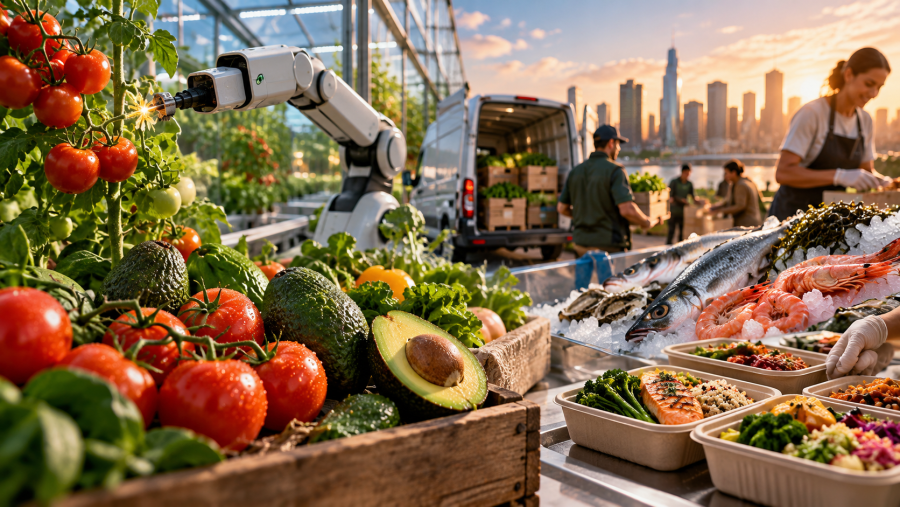
Biobest has introduced Polly, an autonomous tomato pollination robot developed in collaboration with Arugga AI Farming.
Using cameras and image recognition technology, the robot identifies flowers ready for pollination and directs controlled bursts of air towards them.
Polly can complement the work of bumblebees, particularly when high temperatures or insufficient light reduce their activity.
According to trials reported by the manufacturer, the technology has achieved yield increases of between two and six percent.
For greenhouse growers, this is an interesting example of how automation is gradually taking on even some of the most delicate processes involved in crop production. [5]
Big Business: Japan Strengthens Its Position in the Seafood Market
Another major acquisition is taking shape in the international seafood industry.
Japan's Umios has announced an agreement to acquire Canada's High Liner Foods in a transaction valued at approximately 804 million Canadian dollars on an equity value basis.
The combination would bring together Umios's access to marine resources and High Liner Foods' processing facilities, brands, and distribution infrastructure in North America.
One of the most interesting aspects of the deal is the opportunity to create a more closely integrated supply chain — from fishing operations to finished seafood products on supermarket shelves.
The transaction is still subject to the necessary approvals, but it already illustrates how seafood companies are seeking greater control over different stages of their operations. [6]
Good News: Surplus Farm Produce Becomes 100,000 Ready-to-Eat Meals
And we'd like to end this week's edition with a heartwarming story from the US state of Maine, where charitable organisations have found a wonderful way to support both local farmers and people facing food insecurity.
Preble Street and Good Shepherd Food Bank have launched a programme called Harvest to Home. Using locally grown farm produce, including surplus harvests, chefs prepare nutritious meals that are then frozen and distributed through food banks.
Over the next year, the partners aim to prepare 100,000 meals. But this is more than just a promise: on October 27, the first 2,000 prepared meals were already on their way for distribution.
What makes this initiative particularly meaningful is that it also helps people who may struggle to cook for themselves, including older adults and those without access to a fully equipped kitchen.
Sometimes, caring for others begins with something as simple as making sure they can enjoy a nutritious, ready-to-eat dinner. And it's wonderful to know that food which might otherwise have gone unused is becoming a genuine source of support for people who need it. [7]
See You Next Week!
And that brings us to the end of our third news roundup!
Once again, the food industry has shown that its future is being shaped not only in the offices of international corporations, but also on farms, in greenhouses, and in small community kitchens.
If you have an interesting news story, a new technology, an unusual product, or an inspiring initiative from the food industry, send it to the Fresh Insider editorial team. We'll carefully verify the information and will be delighted to share worthwhile projects and stories with our readers.
Stay informed, discover new opportunities, and grow your business with Fresh Insider Agency.
See you next week!
Sources
[1] DoorDash Announces Agreement to Acquire Instacart. Official Statement
[2] Investigation into US Inspections of Imported Fruits and Vegetables. The Washington Post
[3] Restrictions on Raw Tomatoes in Italy. Municipality of Ferrara
[4] Kenya Suspends Avocado Exports by Sea. Kenya News Agency
[5] Polly: Autonomous Tomato Pollination Robot. Biobest
[6] Umios Announces Agreement to Acquire High Liner Foods. Umios
[7] Harvest to Home: Prepared Meals for People in Need. Maine Public